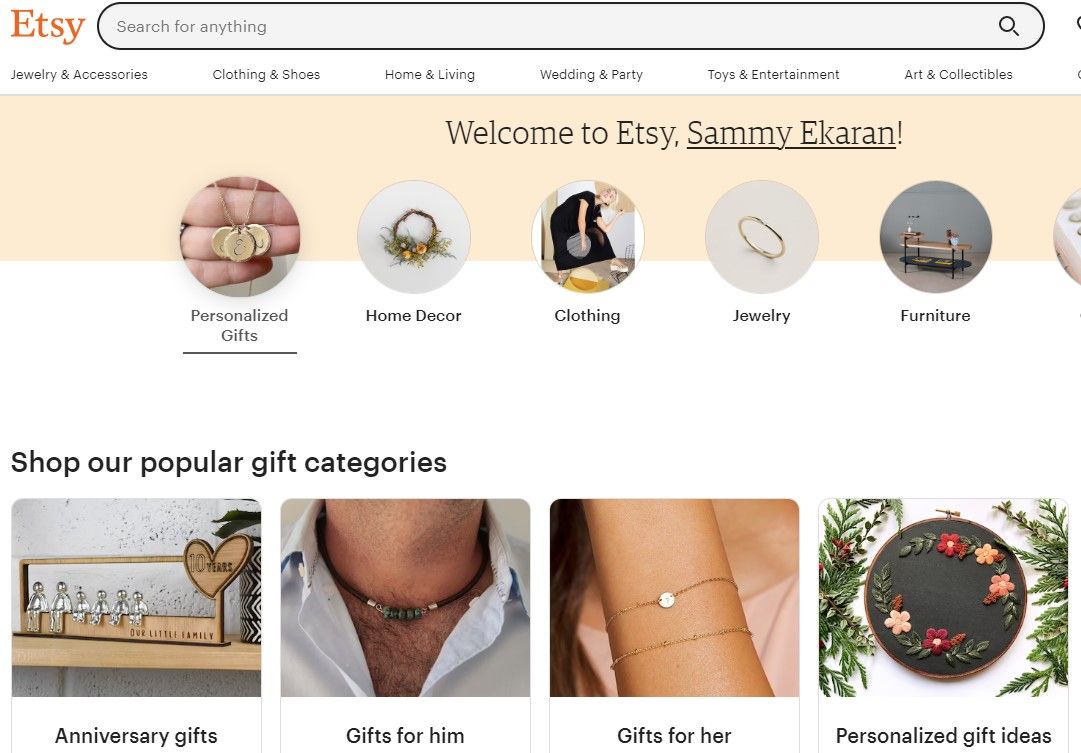
Etsy is a popular website that allows anyone to sell handmade products. It’s popular with sellers because it’s cheaper than setting up their own website, and it’s popular with consumers because you can find unique products unavailable anywhere else.
Etsy has a good reputation because most of the products sold there are genuine. If you use the platform, however, it’s important to understand that scammers are also very much active on there. They don’t make handmade products and instead aim to profit from dishonesty.
Here’s how to use Etsy without being the victim of a scam.
1. Only Shop on External Sites if You Trust the Seller
Many sellers on Etsy ask customers to visit their websites. There isn’t necessarily anything suspicious about this. Etsy charges a premium for selling on their platform and many sellers simply want to save money on fees. Opting to buy from an external website, however, introduces significant risk because you don’t benefit from Etsy’s payment protection.
Unless you trust the seller, you should only make purchases directly on the platform.
2. Research External Sites Carefully
Assuming you trust a seller, and you’d like to buy from their website instead, there are various steps that you can take to avoid scams.
- Look at the URL: Reputable websites all use SSL certificates. An SSL certificate[1] indicates that data sent via a website is encrypted and that your payment details are therefore harder to steal. SSL certificates are displayed using a lock symbol to the left of the website address.
- Search the name of the store: Prior to purchasing anything on an external website, always research the website’s name. A quick Google search might show that it has a history of scams. And if there’s no mention of it on Google, this is suspicious.
- Look for scam-like behavior: If an external website has overly cheap products, spelling mistakes, or strange payment methods, the website should not be used.
3. Always Pay Using a Credit Card
Etsy accepts a wide variety of payment methods, but credit cards are usually the safest option. Credit card providers offer the best fraud protection and will usually refund your money entirely if you are the victim of a scam. Etsy also offers payment protection but because scammers can be both buyers and sellers, Etsy doesn’t automatically side with the buyer.
4. Don’t Pay Outside of the Site
Some sellers on Etsy will ask that you pay them outside the platform after you make a purchase. They might ask you to perform a bank transfer or use a gift card. Any seller that makes this request should be avoided. Off platform payments do allow sellers to save money on fees, but they also prevent buyers from obtaining refunds. They are therefore ideal for scammers.
5. Don’t Believe Provided Information
Etsy allows you to filter sellers based on their location and whether or not their items are handmade. This would be a useful way to avoid scams because most low quality products on Etsy are mass-produced and often sold from Asia. Unfortunately, Etsy allows sellers to fill out their profiles with any information they want, so anything written on a profile is potentially inaccurate.
6. Don’t Provide Personal Information